Literal language refers to words that mean exactly what they say. It is the opposite of figurative language, which uses words in a non-literal way to convey a different meaning. A literal language worksheet typically contains sentences or phrases that can be interpreted at face value without any hidden meanings or metaphors.
For example, a sentence like “The sky is blue” is a literal statement because it is stating a fact that can be proven true or false. Literal language is straightforward and does not require any interpretation beyond the words themselves.
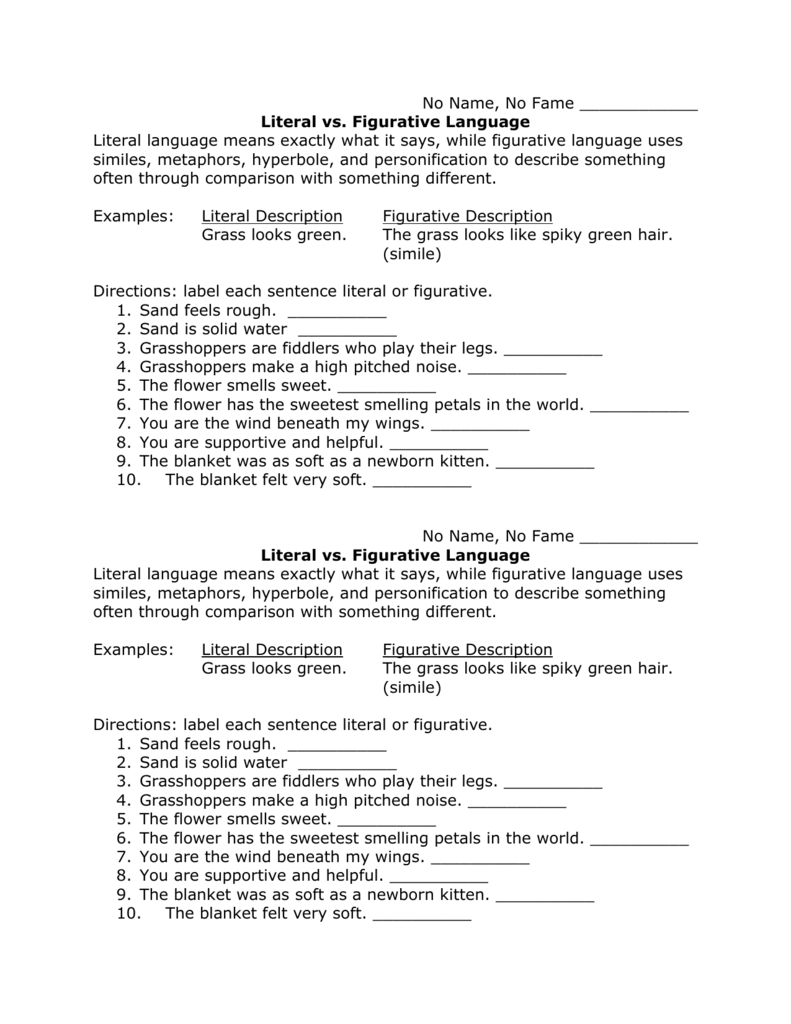
Literal Vs Figurative Language Worksheet
Exploring Figurative Language
Figurative language, on the other hand, uses words in a creative and imaginative way to convey a deeper meaning or evoke emotions in the reader. Figurative language worksheet may include examples of metaphors, similes, personification, and other literary devices that add depth and richness to the text.
For instance, a phrase like “He has a heart of gold” is a figurative expression because it is not meant to be taken literally. Instead, it is using the metaphor of “heart of gold” to describe someone who is kind and generous.
Practicing with Worksheets
Literal vs figurative language worksheets are great tools for students to practice distinguishing between the two types of language. By analyzing sentences and identifying whether they are literal or figurative, students can improve their comprehension skills and learn to appreciate the nuances of language.
These worksheets often include exercises such as matching literal and figurative phrases, rewriting figurative expressions in literal language, and creating their own examples of both types of language. By engaging with these worksheets, students can develop a deeper understanding of how language can be used creatively and effectively.