Diffusion and osmosis are fundamental processes that occur in living organisms and play a crucial role in maintaining cellular homeostasis. Diffusion is the movement of molecules from an area of high concentration to an area of low concentration, while osmosis is the movement of water molecules across a selectively permeable membrane. These processes are essential for the exchange of nutrients and waste products in cells.
Diffusion and osmosis are often compared to each other, with osmosis being a specific type of diffusion that involves the movement of water molecules. In osmosis, water molecules move across a membrane in response to differences in solute concentration, leading to the movement of water from an area of low solute concentration to an area of high solute concentration. This movement of water helps to maintain the balance of solutes inside and outside of cells.
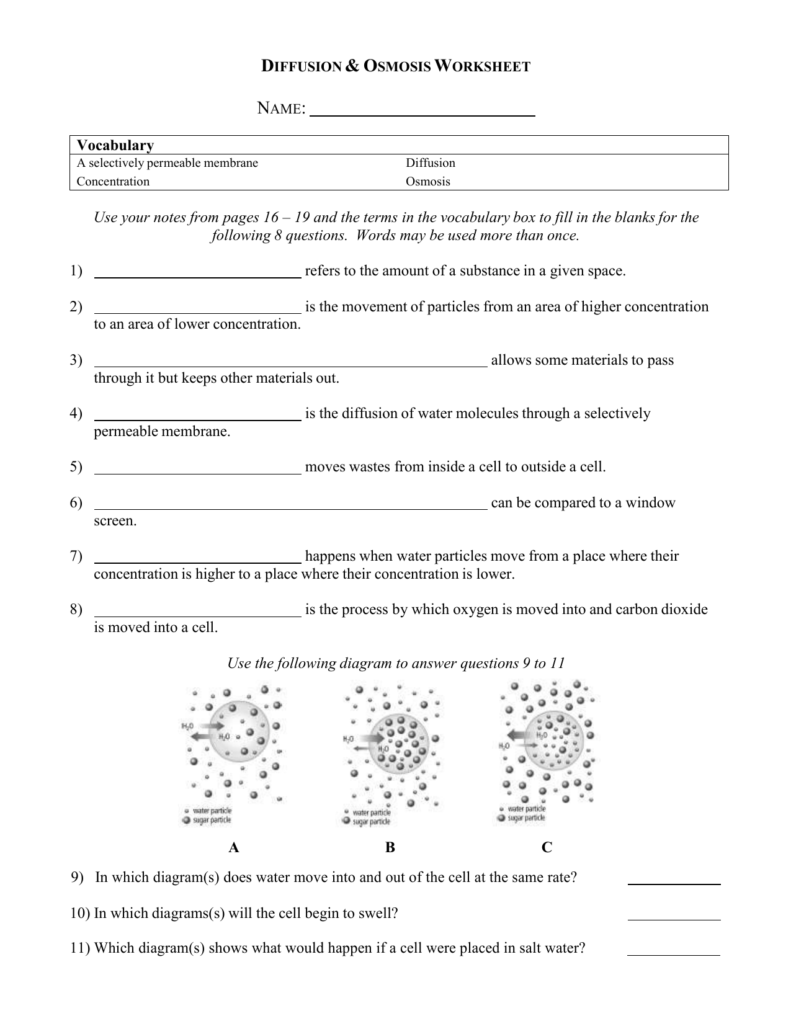
Diffusion And Osmosis Worksheet With Answers
Diffusion and Osmosis Worksheet Questions
1. What is the difference between diffusion and osmosis?
2. How does osmosis help to maintain cellular homeostasis?
3. Explain the concept of selectively permeable membranes in relation to diffusion and osmosis.
4. What factors can affect the rate of diffusion and osmosis in cells?
Worksheet Answers
1. The main difference between diffusion and osmosis is that diffusion involves the movement of all types of molecules, while osmosis specifically refers to the movement of water molecules across a selectively permeable membrane.
2. Osmosis helps to maintain cellular homeostasis by ensuring that the concentration of solutes inside and outside of cells remains balanced. This balance is essential for the proper functioning of cells and the exchange of nutrients and waste products.
3. Selectively permeable membranes allow only certain molecules to pass through, based on their size and charge. This selective permeability plays a crucial role in regulating the movement of molecules during diffusion and osmosis.
4. The rate of diffusion and osmosis in cells can be affected by factors such as temperature, concentration gradient, and the surface area of the membrane. Higher temperatures and larger concentration gradients can increase the rate of diffusion and osmosis, while a larger surface area allows for more molecules to pass through the membrane.
By understanding the principles of diffusion and osmosis, students can gain a better understanding of how cells maintain homeostasis and exchange nutrients and waste products. This worksheet provides a comprehensive overview of these processes, along with detailed answers to common questions to help reinforce learning.
Download Diffusion And Osmosis Worksheet With Answers
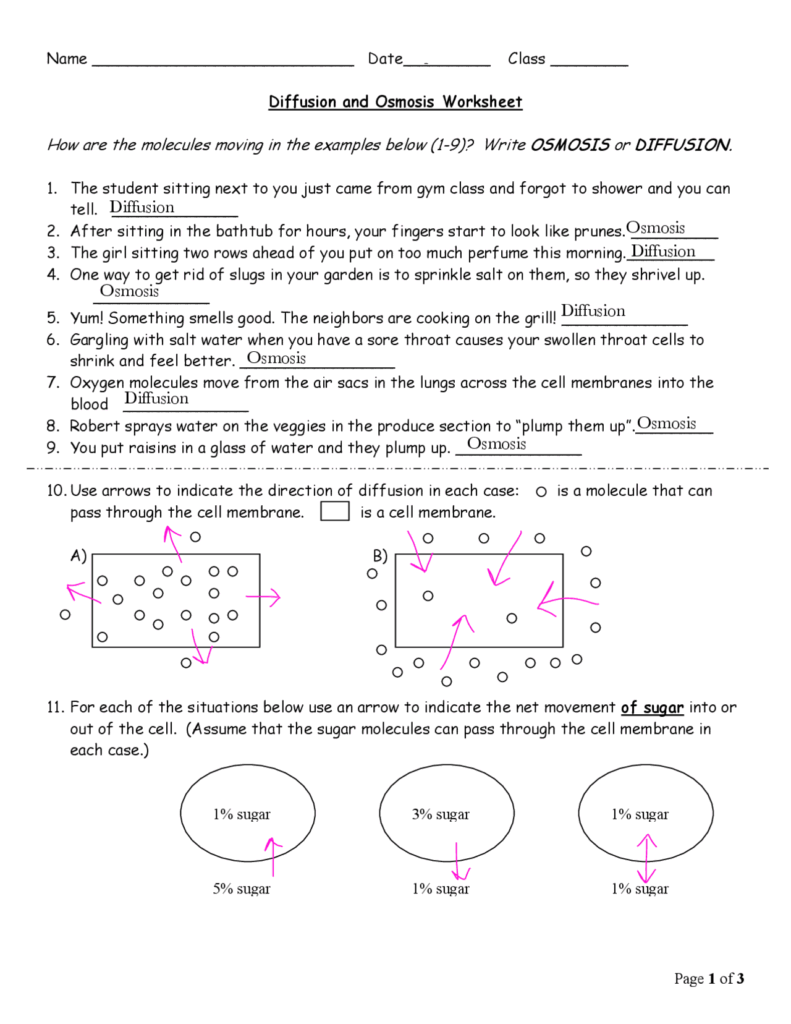
Diffusion And Osmosis Worksheet With Answers Exercises Biology Docsity
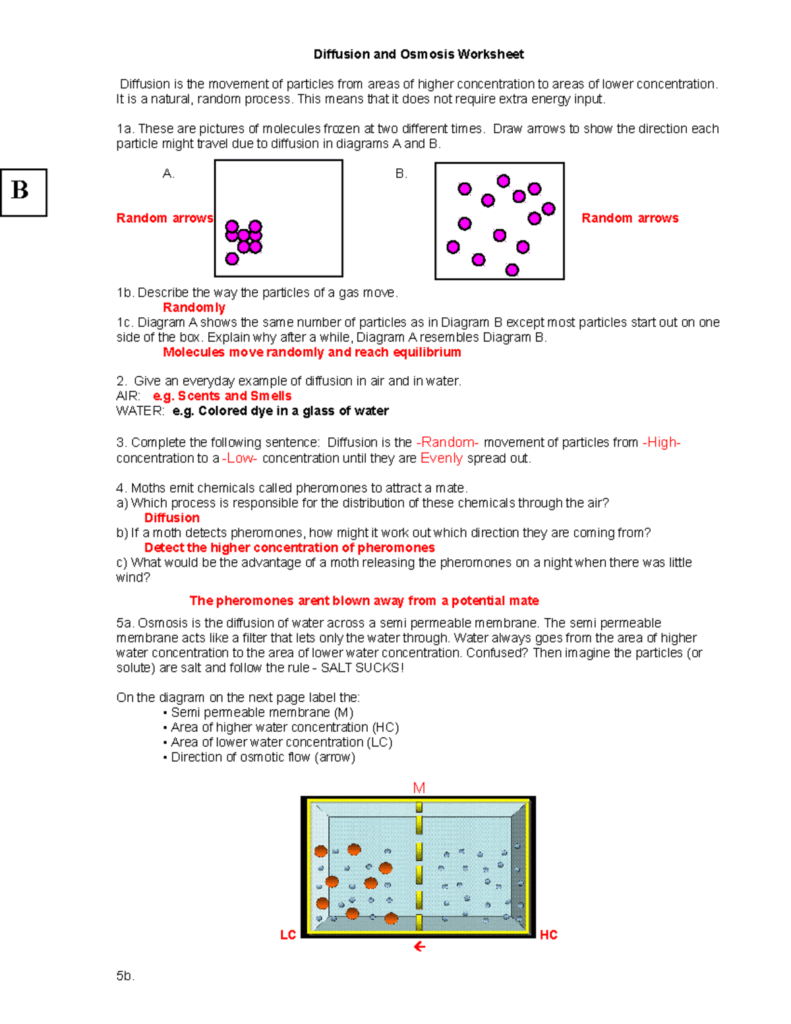
Diffusion And Osmosis Worksheet KEY 08 Concepts And Examples Studocu
Use This Handwriting Worksheet Generator To Create Diffusion And Osmosis Worksheet With Answers