Connotation and denotation are two important concepts in language that can greatly impact how we interpret words. Denotation refers to the literal or dictionary definition of a word, while connotation refers to the feelings and emotions that a word may evoke. To better understand these concepts, it can be helpful to use a worksheet that provides examples of words with different connotations and denotations.
For example, the word “snake” has a denotation of a long, legless reptile. However, the connotation of the word may evoke feelings of fear or danger. On the other hand, the word “puppy” has a denotation of a young dog, with connotations of cuteness and playfulness. By exploring words with different connotations and denotations, students can better understand the power of language in shaping our perceptions and emotions.
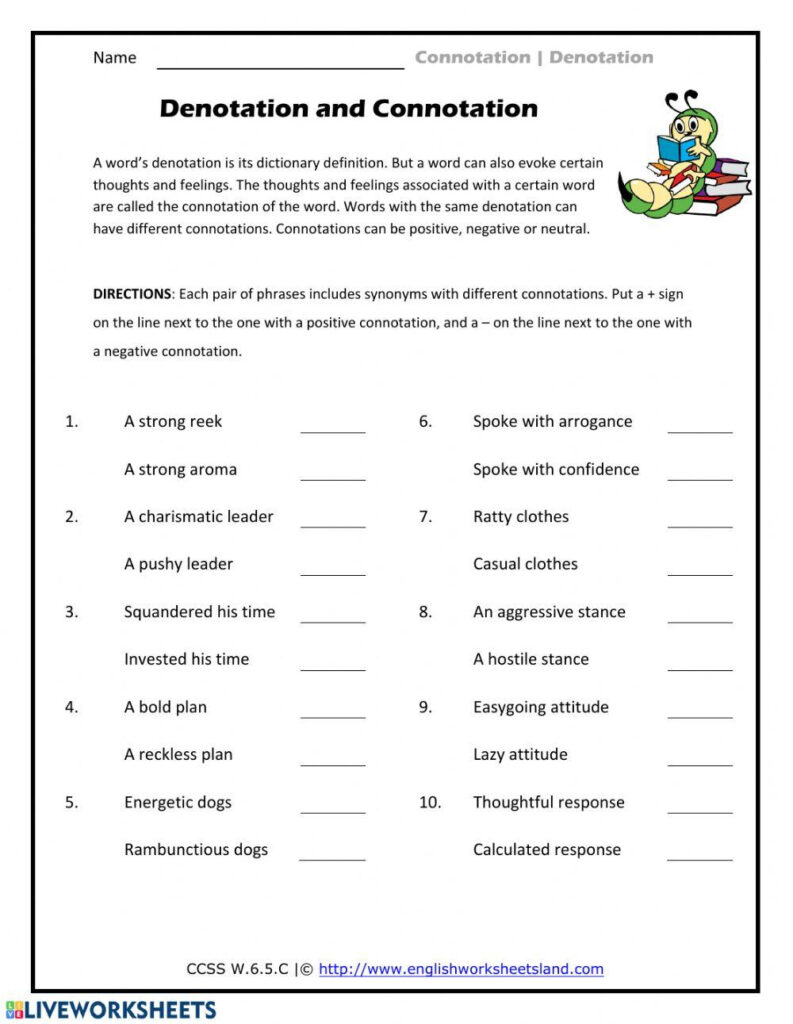
Connotation Vs Denotation Worksheet
Using a Connotation Vs Denotation Worksheet
A connotation vs denotation worksheet typically includes a list of words for students to analyze and categorize based on their denotations and connotations. Students may be asked to identify the denotations of each word and then consider the connotations that the words evoke. This can be done through activities such as writing sentences using the words in different contexts or discussing how different connotations can change the meaning of a sentence.
Worksheets can also include exercises that challenge students to think critically about the use of language in literature and everyday communication. By engaging with words on a deeper level, students can develop a greater awareness of how language influences our perceptions and interactions with the world around us.