Deletion mutations occur when a section of DNA is lost during replication, resulting in a loss of genetic information. This type of mutation can have significant effects on an organism, as it can disrupt the normal functioning of genes. Deletion mutations can range in size from a single nucleotide to large segments of DNA. In some cases, a deletion mutation can lead to a frameshift mutation, where the reading frame of the gene is altered, resulting in a completely different protein being produced.
Deletion mutations can have various consequences, depending on the size and location of the deletion. For example, a deletion in a gene that codes for an essential protein can lead to a loss of function, resulting in a genetic disorder. On the other hand, deletions in non-coding regions of the DNA may have minimal impact on an organism’s phenotype. Understanding the effects of deletion mutations is essential for studying genetic disorders and developing treatments.
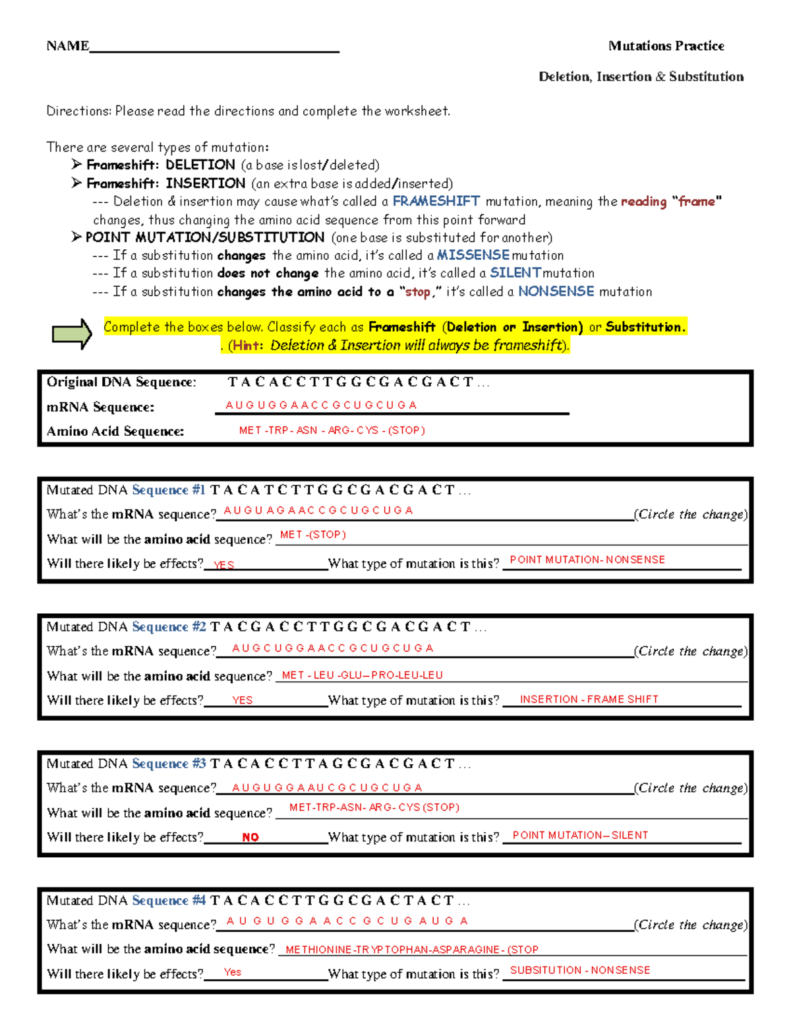
Mutations Worksheet Deletion Insertion And Substitution
Insertion Mutations
Insertion mutations occur when extra nucleotides are added to a DNA sequence during replication. Like deletion mutations, insertion mutations can have significant effects on an organism’s genetic makeup. The added nucleotides can disrupt the normal reading frame of a gene, leading to a frameshift mutation. This can result in the production of a completely different protein or a non-functional protein.
Insertion mutations can also lead to genetic disorders and other health problems in organisms. The size and location of the inserted nucleotides can determine the severity of the mutation. Some insertion mutations may have no noticeable effect, while others can have devastating consequences. Studying insertion mutations is crucial for understanding genetic diseases and developing therapies to treat them.
Substitution Mutations
Substitution mutations occur when a single nucleotide is replaced by another nucleotide in a DNA sequence. This type of mutation can have a wide range of effects, depending on the specific nucleotide change and its location in the gene. Substitution mutations can be classified into two main categories: silent mutations and missense mutations.
Silent mutations occur when the nucleotide change does not alter the amino acid sequence of the resulting protein. In contrast, missense mutations result in a change in one amino acid in the protein sequence. This can lead to a protein with altered structure and function, potentially causing genetic disorders or other health problems. Substitution mutations play a key role in genetic diversity and evolution, as they can introduce new genetic variants into a population.
By understanding the different types of mutations and their effects on organisms, researchers can gain valuable insights into the genetic basis of diseases and develop targeted therapies to treat them. The Mutations Worksheet: Deletion, Insertion, and Substitution provides a comprehensive overview of these important genetic processes and their implications for human health.
Download Mutations Worksheet Deletion Insertion And Substitution
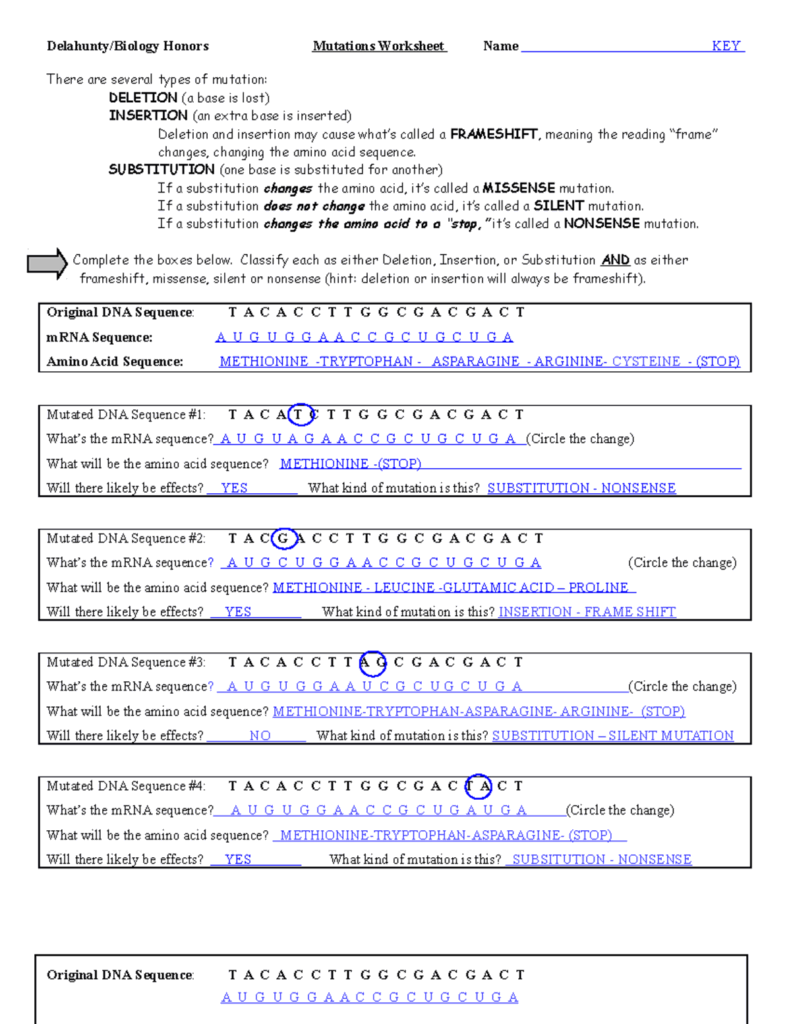
Mutations Biology Honors WS Key By Sonal Tonger Studocu
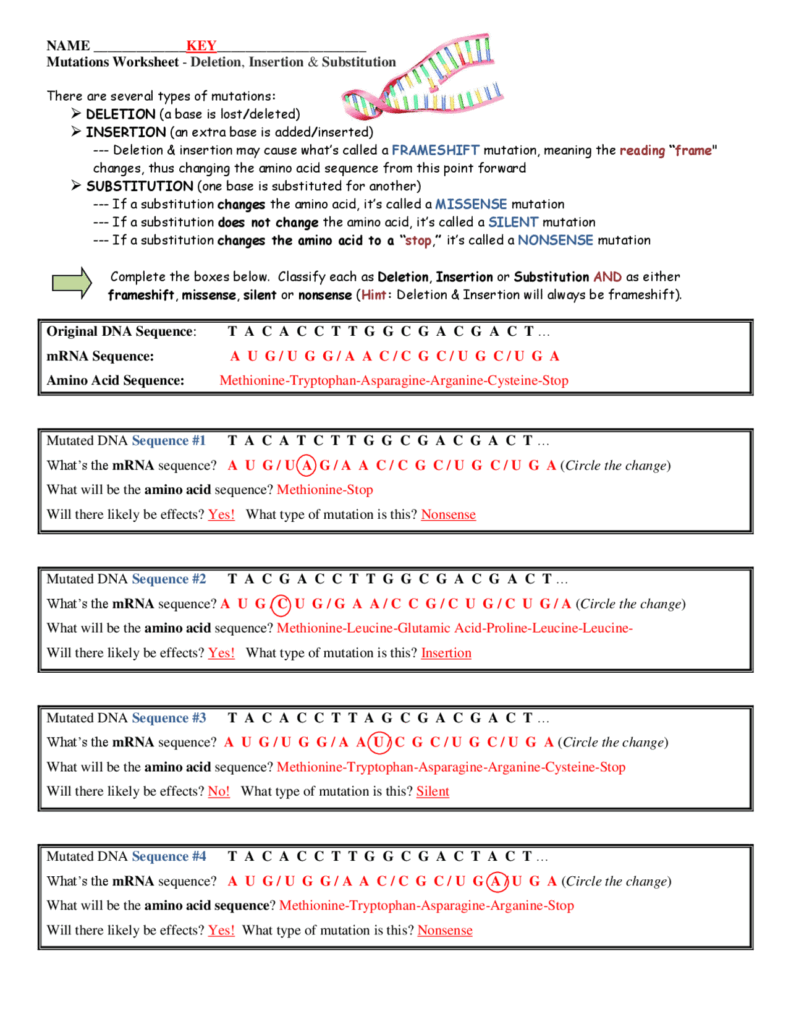
Mutations Worksheet Key Deletion Insertion And Substitution Exercises Genetics Docsity
Use This Handwriting Worksheet Generator To Create Mutations Worksheet Deletion Insertion And Substitution